
What is going on with children’s attention span and behaviour these days?
Keeping up to date with the latest emerging research this article explores some recent findings around the effect of early years interactive screen usage on physical brain development and related behavioural issues. We will share 3 video pieces relevant to screentime and wider attention span and other related behavioural issues.
Short on time? Here is a quick summary of the key points of the article:
- The new finding is that recent MRI studies have shown a deficit in white matter in the brains of children who use interactive devices and this may impact executive function (including emotion regulation, impulse control, focus and attention span). As little as 2 hours a day was sufficient to drive a recognisable impact in these studies. The emerging recommendation seems to be zero time on INTERACTIVE screen devices for children under 5 years of age.
- The general guidelines for screentime usage with children remains unchanged as yet (to see our previous detailed article on this [click here] and if you are going to use interactive screen devices never let children use them independently, always with direct involvement of an adult.
- “Human beings are ultra social creatures with a deep need for community and communion” (social connection and physical interaction with others) – Jonathan Haidt, author of The Coddling of the American Mind and The Anxious Generation. Extensive use of interactive devices and social media drastically reduces this social interaction at a time when young brains are vulnerable to developmental issues. Haidt and others are calling for bans on social media, in particular for children and teenagers, and a return to physical social interactions. The neuroscience supports the idea of children’s brains “rewiring” themselves via experience; indeed this is at the heart of how children learn, especially through play and observation. Therefore, brains being rewired by extensive use of interactive devices and social media, as Haidt suggests, is consistent with neuroscience.
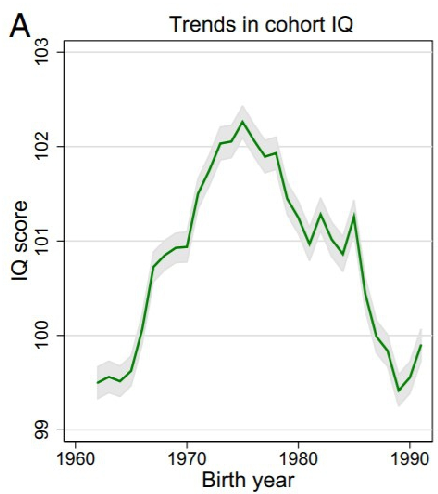
- It is not just about interactive devices and social media and it is dangerous to draw such a conclusion. Data shows a steady decline in cognitive development since about 1975 way before the internet and interactive devices but about the time that childhood freedom began to be curtailed due to “safety” concerns and also when dual income families started to increase. Other factors such as a reduction of outdoors activity, loss of play break times in schools, loss of a constant parental presence in the home, reduced imagination driving self-led play (screen devices being used instead), and reduced social interaction with peers, and related freedom to wander unsupervised are among the documented differences in childhood pre 1975 vs today. And the situation is getting worse not better…
- There are things parents can do to avoid issues like attention span deficiency and lack of focus. Emma Hubbard, Paediatric Occupational Therapist practitioner, offers some observations and advice including: avoid sudden change of routine stress; ensure children are getting enough sleep; offer fewer toys; play with children like a child would and she also concurs with the findings on use of interactive devices.
Read on for more in-depth understanding of this topic
There is a lot of talk about poor attention span in children these days; most of it blames social media and smart devices (often referred to as “screentime”) but is this true and if so is it the whole picture? Recent research sheds some light on the topic and may help parents identify potential issues and address them at home.
Smart Screen usage
First, screentime, or rather specifically interactive screen devices rather than all screens because the studies in question specify interactive devices not passive ones like Television. We need to ask ourselves if the advent of the internet and smart devices is a particular issue for child brain development. Also be aware that computers are also interactive devices, it isn’t just smart phones.
Recent publication of MRI based studies on early years aged kids reveals some concerning results. It seems that prolonged use of “interactive smart devices” may be reducing white matter development in the brain, also known as myelin, a sort of insulator around brain neurons, a bit like plastic around an electric wire. This deficiency of myelin creation may result in a deficit of neural connectivity (how the brain works). The studies show that as little as 2 hours a day can have a profound effect on children’s myelin levels and this can have a direct impact on language development and literacy and also on behaviour (e.g. tantrums and attention span, ability to focus and so on).

To be clear, the research did not draw a direct line to attention span or any of the other data trend findings showcased in the video report below, so we must be careful not to jump to such conclusions without actual hard research findings and not get carried away with media hype. There are many other drivers of, for instance, mental health issues in children these days vs past generations (see next section for more details on this).
However, we cannot discount the MRI myelin deficit finding and thus ought to err on the side of caution when it comes to the use of interactive devices with children, especially those of Preschool age. The recommendation from the researchers seems to be zero time on interactive devices for children under 5 years of age.
At Purple Dragon we do not use interactive devices with children. We do use TV monitors to project carefully selected content that enhances the lesson plans within the recommended guidelines as denoted in our related article [Screen time for Preschool Children – click here to read].
So it is all about the screens then?
Is the issue limited to the use of interactive devices? Well, the deficit in myelin was directly attributed to use of interactive devices but the study reporting did not elaborate on content type or mode of usage. The impact might not be because of the physical devices themselves but rather how a child’s brain is impacted by the content type, how they engage with the content via the interactive devices and probably how the content is designed for use with interactive devices.

This would be consistent with other research. It may be extremely hard to separate the physical interactive devices from the content type in terms of harms; further research would be required to understand this nuance. Thus, the current guidelines for moderation of content type and how children experience this content remains valid (see our previous piece on Screen time Preschool Children for more details). Still, following the calls being made by the researchers, elimination of interactive screentime for children under 5 would seem appropriate, at least until we know more. If you are going to use them then never let children use them independently, always with direct involvement of an adult (again see our article “Screen time for Preschool Children” covering guidelines for safe use of screen-based content).
There is sufficient data for specific concern over smart device usage and social media engagement, but the issue of attention span, and mental health in general, has wider impacting factors than interactive devices alone. Jonathan Haidt, author of The Coddling of the American Mind and The Anxious Generation, has a worthwhile take on this (see his Ted Talk below). He says, “human beings are ultra social creatures with a deep need for community and communion” (social connection and physical interaction with others).

He is concerned about the loss of social connection via the extensive use of social media and the associated impact on mental health. This isn’t the same issue as the myelin deficit findings, it is a psychological impact rather than a physical one and points to social behavioral changes as a result of social media itself rather than the interactivity of the devices used. But perhaps we are seeing two sides of the same coin here?
And certainly the neuroscience supports the idea of children’s brains “rewiring” themselves via experience, as Haidt mentions in the Ted Talk. Indeed, this is at the heart of how children learn, especially through play and observation.
Again, we need to be careful of drawing conclusions about the cause and effect relationship between social media/interactive device usage and data trends like falling national test scores that Haidt referred to. 1-2-1 devices was not the only change made in classrooms! In the US, and many other countries, they also changed the way they taught subjects, for example not using phonics to teach English and teaching children about things that many parents deem inappropriate, like climate catastrophe and gender fluidity, even in Kindergarten, if you can believe it!
In US states where they have returned to phonics and eliminated questionable topics the test scores have dramatically improved. Which is not to say social media and 1-2-1 devices do not play a role, just that it is not the only driver of poorer academic performance nor of other mental health and behavioural issues.
It must be noted that data shows a steady decline in cognitive development since about 1975, known as the “Flynn Effect”, way before the internet and interactive devices emerged but about the time that childhood freedom began to be curtailed for “safety” reasons and also when dual income families started to increase and has continued to do so to date.
This is a very complex problem that cannot be boiled down to any one factor, life just isn’t that simple. Some of the documented differences between pre 1975 upbringing and the current day situation include the following:
- School environments (especially what is being taught, how it is being taught and a reduction or elimination of recess play time);
- Covid 19 pandemic policy impacts since 2020;
- Lack of outdoors playtime at home and in schools;
- Lack of physical social interaction with peers;
- Reduced, or eliminated, unsupervised time for older children and;
- Reduced time with parents in formative years as more and more dual income family dynamics emerge in modern life and inappropriate usage of smart devices during family time.
At Purple Dragon we follow a play-based development method coupled with extensive outdoor situated lessons and physical exercise. We do not introduce controversial topics like climate change, limiting to localised environmental factors only in our STEM lessons so as not to terrify children but stimulate their curiosity. Our method promotes social group and team activities with an emphasis on developing social awareness and group interaction skill in children.
But what about attention span and behavioural issues specifically?

While it seems clear that 1-2-1 device usage in schools (the so-called technology enabled classroom) and personal device access and usage both at home and in schools, presents a significant risk to cognitive, behavioural and social development in children, especially in early years, this is not the only reason we see issue like attention span deficiency. The risk factors driving attention deficit are by no means limited to the school environment.
Indeed, it is likely a greater degree of impact occurs outside of school, especially schools that limit use of screens, carefully curate any screen-based content and promote outdoor activity. Emma Hubbard, Paediatric Occupational Therapist, lists a number of causal factors that influence attention deficit as detailed below. [Note: she also references the previously discussed MRI study, which we will not repeat here, but she does concur. She also concurs with the general finding on content type and quality covered in our previous article on Screen time for Preschool Children] In the below video Emma offers practical insights as a practitioner rather than a researcher. Her insights can be summarised as follows:
- Her first factor is the fight/flight/freeze response, which, as adults, we recognise occurring when confronted with danger. But for children it isn’t just danger that triggers this but a host of other factors that cause unpredictable situations for the child, which adults do not intuitively recognise as a problem. A stable routine is the defense against this and calm, signaled, adjustment due to necessary changes to this routine. This is also why a chaotic home environment causes toxic stress (see our website pages that cover the topic of toxic stress and the life long issues caused).
- Unsurprisingly, insufficient sleep is another big issue because a lack of sleep for children impacts grey matter, reducing it in developing brains, which in turn impacts attention, memory and impulse control. It would not be hard to imagine a scenario where excessive interactive device usage exacerbates sleeplessness resulting in both grey and white matter development deficiency! A perfect storm… [No data that we are aware of exists on such a scenario at the time of writing]
- Excessive screen use. Emma Hubbard also concurs with the previous research detailed above.
Emma Hubbard also offers some practical ways to improve attention span as follows:
- Stick with a task for an extended period of time. But how if children have poor attention span? The answer is to use play because children not only love to play but have evolved to do it to learn, especially in the early years (a core philosophy for us at Purple Dragon). It isn’t just about the act of playing but also the way the adult plays with them that is important to actively building their attention span, you need to play the way they play and avoid lecturing to teach or doing things for them or excessive praise, rather use play to demonstrate things they can learn intuitively and try themselves and be more like a friend than a parent.
- Give your child fewer toy options. This may seem counter intuitive as more choice might be expected to drive longer play as children are less likely to get bored right? It seems the opposite is true because the more toys children have the less time they play with each one because they keep flitting to the next one and the next and so on. So when they have fewer options they become more engrossed in what they have and play longer with an individual toy, which improves attention span and focus and promotes creativity. Furthermore (not covered by Emma), children of the pre 1975 generation generally had few shop bought toys and as a result used their creativity to make them (toy guns made from bits of old wood, go karts from old bicycles and prams, a DIY ramp for bicycle stunts and so on). In fact these DIY toys were more favoured than the shop bought ones.
- Get children to play independently. Psychologists agree that this is vital for child development, especially in self-reliance, imagination/creativity and to learn they do not need constant attention and external stimulation to be content (which is what they learn from interactive screens if left alone to use them – they use the screens to avoid boredom but boredom is the source of creative inspiration!). Avoid praise or encouragement during the independent play as this distracts them from their play and reminds them you are there and a source of entertainment and attention. It should also be noted that children of the 1970s were regularly bored and told by parents to “go and amuse themselves”. This boredom is critical to inspiring creativity or driving children to pick up a book.
- Allow children to do things for themselves. Often children want to do this, it is part of their natural development, and when they demand this, let them, even if it takes longer (build time into your schedule for this self-reliance, it is time well spent). In fact, because it takes longer, and they want to do it, it forces them to focus and see the task through, which improves attention span and focus.
How do we make sense of all this?
Early years sets the foundation for future development, it must not be diminished with inappropriate experiences, rather it should be a time of stimulation: intellectually, physically and emotionally. This is at the core of the Purple Dragon play-based method.
It seems clear, subject to any further research findings, that the big news is the harm caused by content type created for interactive devices and the interactivity with this type of content, especially if done independently of a parent or carer. Therefore, we at Purple Dragon conclude that children of Preschool age ought not to be given self-control of such devices.
Any activity that might utilise such devices must be closely supervised by an appropriate adult who regulates the interactive usage, time spent and the type of content. Better by far to stick to age-appropriate push content and avoid interactive devices at all.

And adhere to the guidelines as showcased in our previous article, especially as regards independent consumption of media, technoference and social interaction [click here to view our detailed piece on this and how we follow the guidelines to curate age-appropriate content within our lesson plans].
At Purple Dragon we do not use interactive screen devices with children and any use of technology is driven by the teachers and only used in a carefully curated way to enhance learning.

We can also conclude that there is a wider societal issue with keeping children indoors, a lack of social interaction and physical play, both with adults and peers, and a bias for a rigid schooling structure too early that is at odds with the way early years children are evolutionarily conditioned to learn and develop. It is not hard to see evidence of the truth of this, all you have to do is observe the way children come alive and the joy in their expressions when they are let loose in a playground with their friends.
We ought to make more time to be with our children and play with them, talk to them and let them observe adult interactions in the family and elsewhere. This is how they learn best. If they are stuck behind a screen or shut away from adults, they do not have this opportunity to learn by example. Accepting also to balance this interaction time with the need to encourage them to play independently. And the Malaysian government seems to have recognised this as from 2027 we understand they will be shifting to play-based teaching methods as the default for government run schooling.
At Purple Dragon play-based child development is our core philosophy, supported by outdoors time and physical education and social teamworking skills.
Our children must get sufficient sleep. Keeping them up late because it suits our own schedule may be hurting them if it means they wake up groggy and grumpy and not ready for the learning and development opportunities the day has to offer. Insufficient sleep causes toxic stress and brain development deficiencies because of lack of attention, fatigue and inability to consume and remember learning.

Another thing that causes toxic stress is excessive fight or flight stimulation due to lack of routine or sudden departures from routine without sufficient warning. This can be difficult when things happen but allowing a bit of time to get ready for a change will reduce the stress and the tantrums.

This will in turn promote positive brain development in the prefrontal cortex, the area responsible for so-called “Executive Function”, which is the area that regulates emotion and self-regulation, among other things. So reducing this fight/flight/freeze response promotes better executive function development and consequently improves attention span and self-regulation of emotions (e.g. fewer tantrums).
At Purple Dragon we operate a structured timetable-based schedule for both school lessons and after school daycare with advance signaling of changes and transition methods to minimise stress. We also teach children about how their days are structured so they begin to anticipate the next activity and are comfortable with the schedule. And of course we teach the children about emotions and how to regulate their feelings.
To conclude, there is a lot we don’t know about emerging technology but some things are pretty clear. There are things about modern life that are impacting child development and we can do something about mitigating that, if we cannot always eliminate it. In the end there is always progress and change, to which we must adapt, but we should keep the things that work, blend the new things that enhance into our lives and avoid the things that hamper the development of our children. This is the Purple Dragon way.